There is a page on this site I keep coming back to. It is not a tutorial or a review. It is the AI Art Gallery, twelve images of dragons, wizards, elves, and one very serious cat who runs a coffee shop.
People ask where the art comes from, so here is the answer. Every piece on that page was made with ChatGPT 5.5. Not a separate image tool, not a special generator. ChatGPT, the same app I use for writing and planning, is the whole pipeline. The idea, the prompt, the iterations, and the final pick all happen in one place.
Every piece on that page started as a prompt in ChatGPT. The idea, the iterations, and the final image all happen in one place.Cliff
Why The Gallery Exists
The gallery lives at /ai-art/ and it is exactly what the name says: a wall of my favorite pieces. The fantasy art is my favorite to make, because those are the scenes that would cost a fortune to shoot or paint for real. A dragon queen in a cave of glowing emerald. A fairy queen with stained glass wings before a moonlit realm.
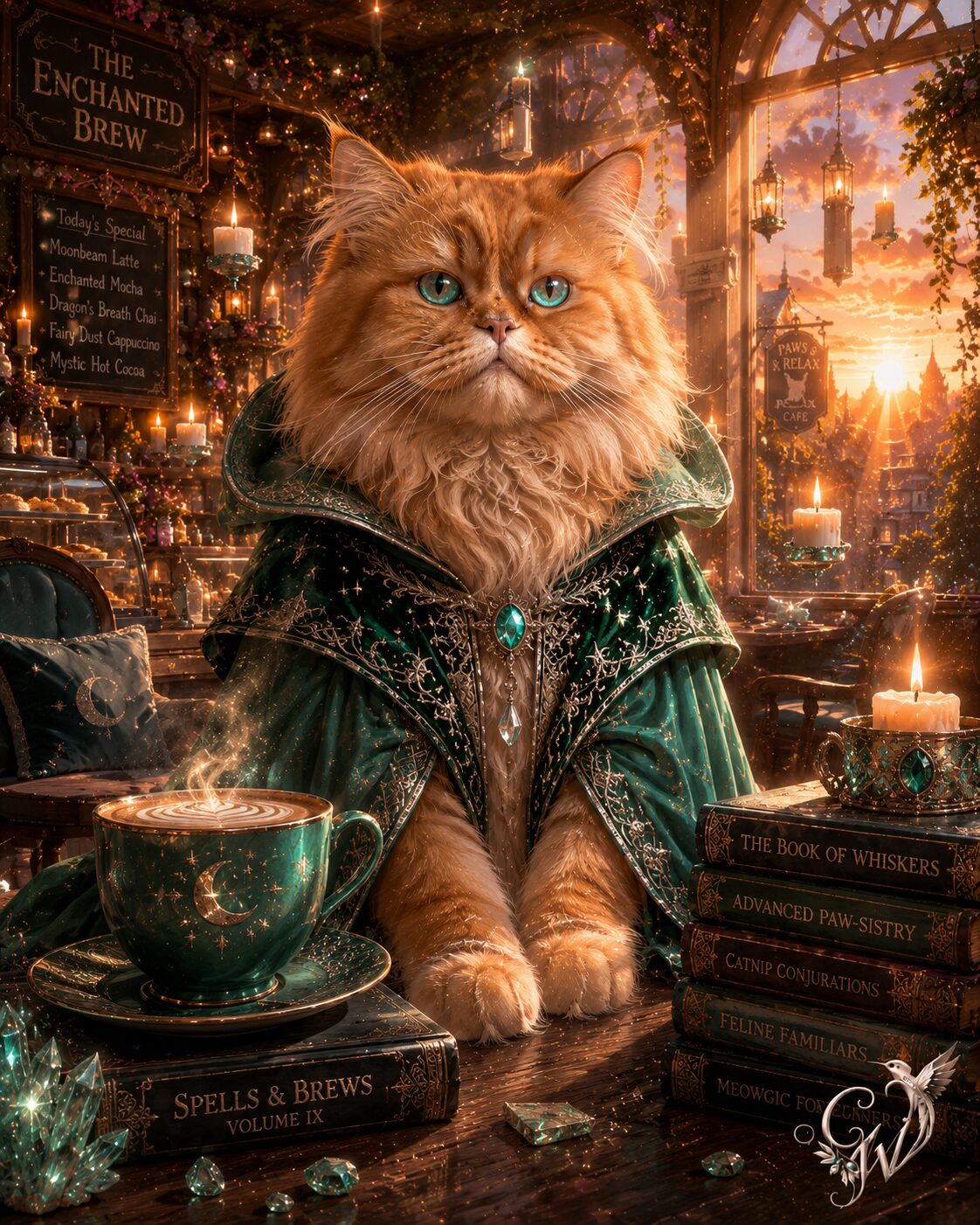
A couple of pieces are there for a different reason. Sir Cinnabar is a wizard cat running an enchanted coffee shop, and he earned his spot by making me laugh. The Lavish Queen is a chess piece of gold filigree and purple gems, and she earned hers by looking absurdly good.
Each piece has a one line caption about how it was made, and clicking any image opens the full version.
Every Piece Starts With An Idea
None of these start with a blank canvas. They start with a character or a scene I want to see, and the prompt is my way of describing that scene out loud.
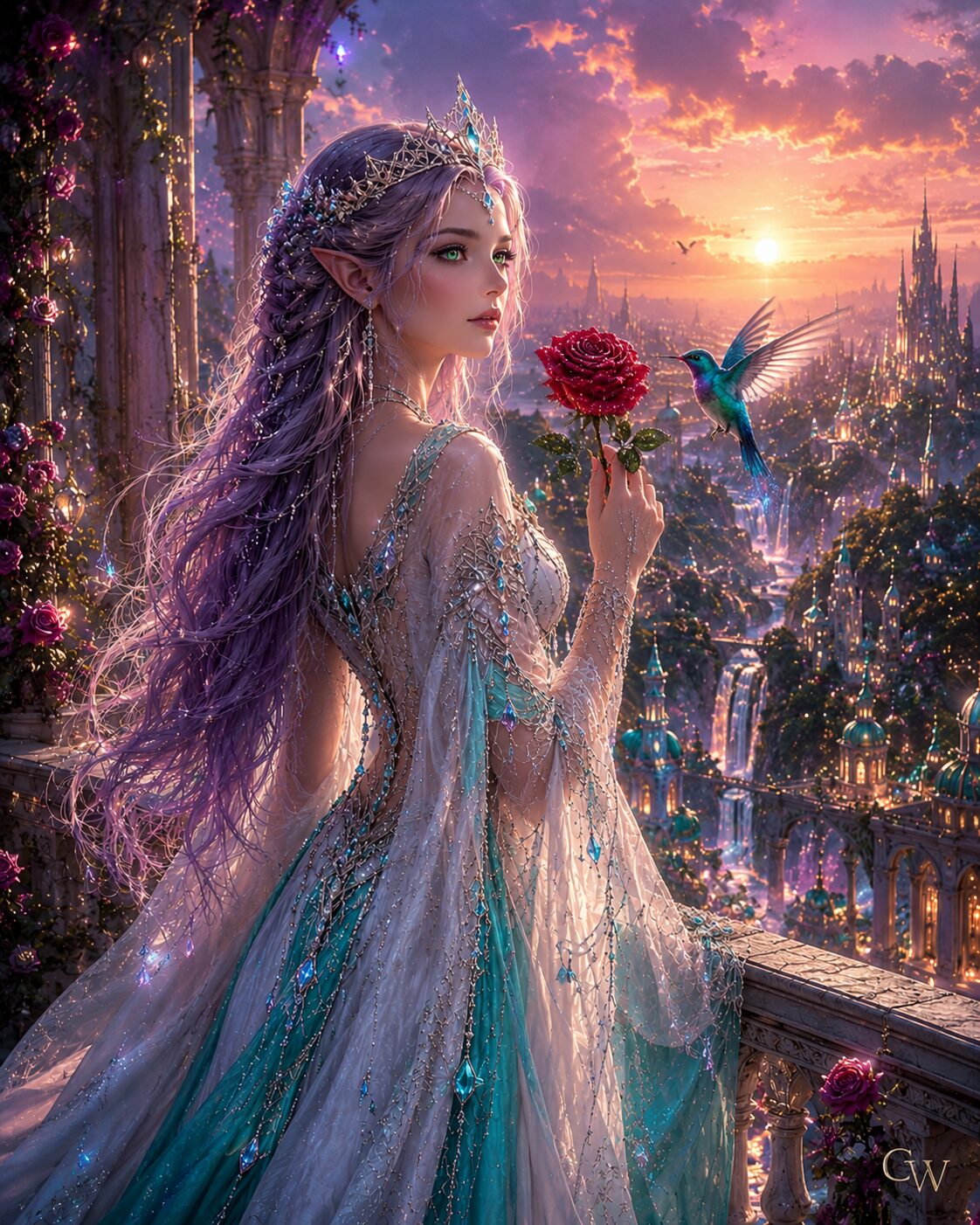
My prompts are heavy on detail. Lighting, mood, the small things that make a scene feel alive. For Elven Princess, the rose and the hummingbird matter more than the kingdom behind her. For Kaelithra, the dragon queen, the glowing emerald cave is the whole mood. For Velouria, the jeweled dragon, the cavern full of treasure is the whole mood. The subject tells you what is in the image. The details tell you how it feels.
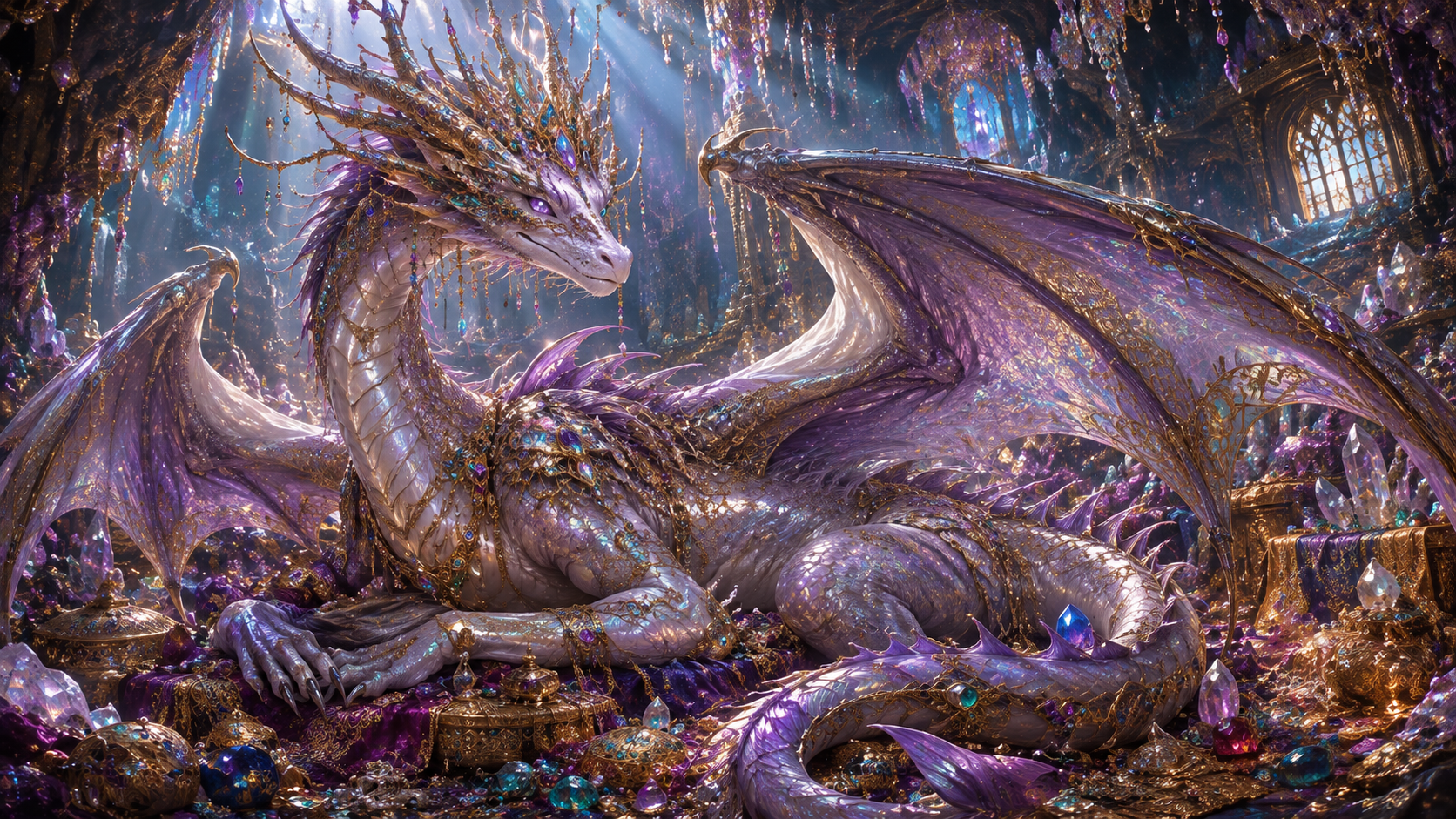
A prompt describes a scene, not just a subject. Lighting and mood are what make the image feel alive.
The Iteration Loop
Here is the part that surprises people. I rarely get a keeper on the first pass. I generate in batches, pick the strongest one, then refine. Sometimes a single word changes the whole feel. Sometimes I scrap the prompt and start over from the idea.
The pieces on the gallery are the survivors. Each one went through a few rounds, and some went through a dozen. That is not a failure of prompting. It is just how image generation works. The first version is a sketch, and the sketch is where the conversation starts.
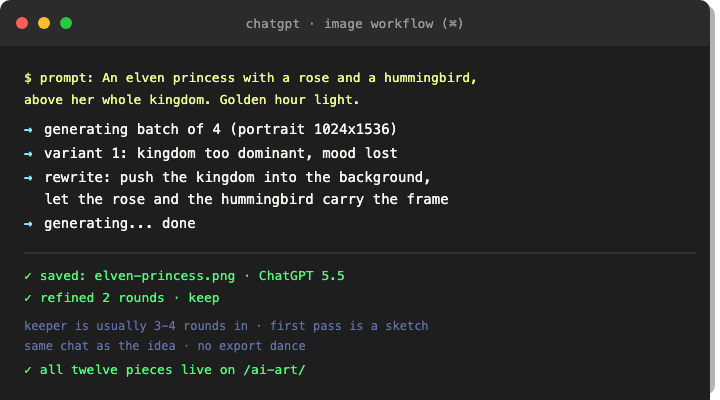
The first version of almost every piece on that page is not the one that made it. Budget for iterations. The keeper is usually three or four rounds in.
Why ChatGPT
I use ChatGPT for all of this, and the reason is simple: it is where I already work. My writing, my planning, and my research all live there. The art generator is one tab away, and the prompt sits in the same chat as the idea that produced it.
That changes the loop. Refining an image becomes a conversation. I say the wings should be glassier, and a new version comes back. I keep pushing until it feels right, without exporting files or moving between tools. No separate pipeline, no second subscription, no export dance.
Keep your art in the same tool as your ideas. When iteration is a conversation, you actually do it.
Two Pieces, Idea To Wall
Two examples show the range.
Elven Princess. The idea was small: a princess with a rose and a hummingbird, above her whole kingdom. The first batch leaned too hard on the kingdom, so the scene read as a landscape. The keeper came from a rewrite that pushed the kingdom into the background and let the rose and the bird carry the frame.
Sir Cinnabar. A wizard cat running an enchanted coffee shop. No grand ambition, just a scene I wanted to see. It came together fast, and that is its own lesson.
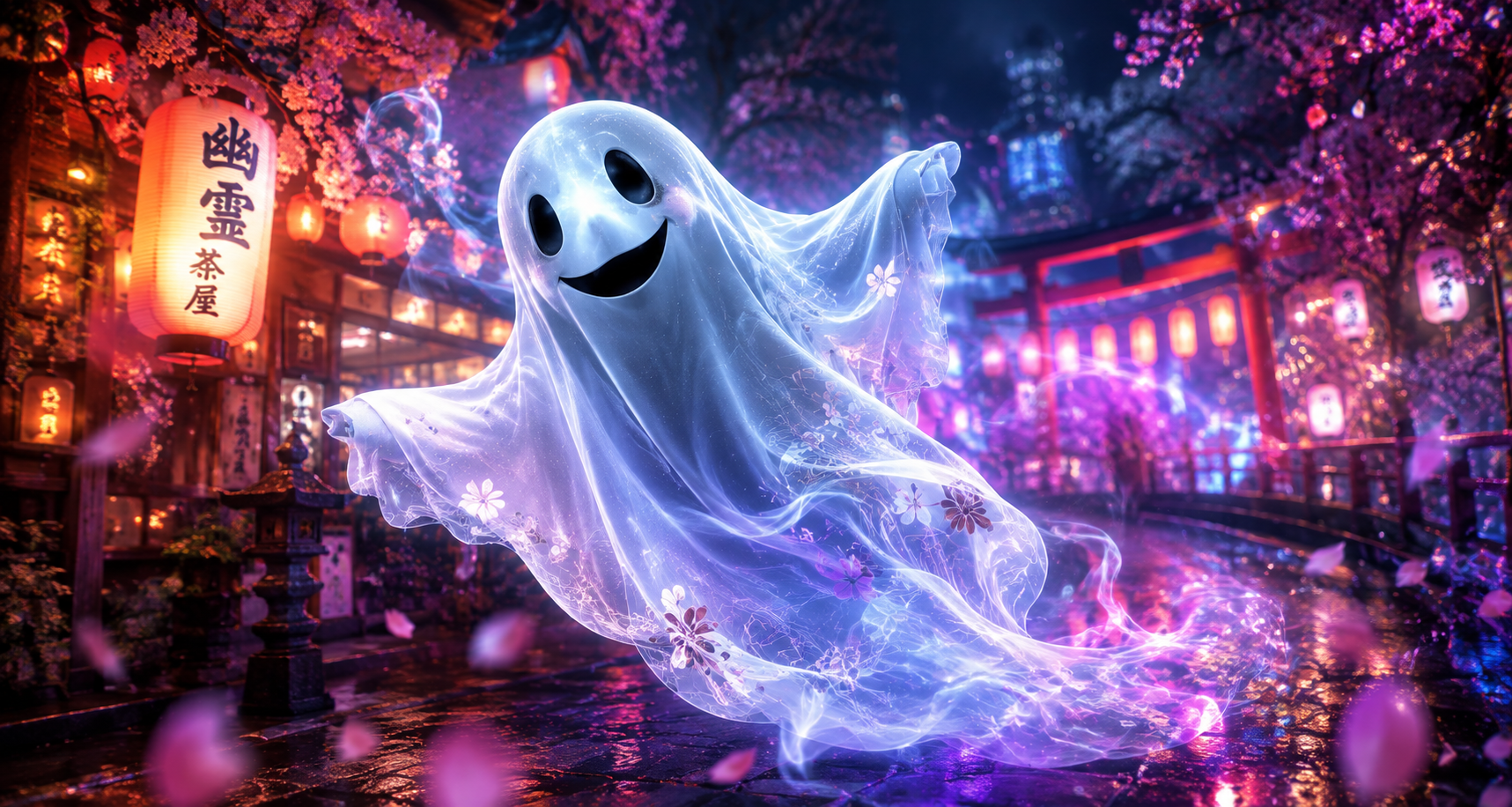
Not every image needs to be epic. Some just need to make you smile. Ghosty, a cheerful ghost drifting through a rainy night market, is exactly that kind of piece.
See The Gallery
The gallery is live with all twelve pieces and the story behind each one. If you want the bigger picture of how AI fits into this site, the How I Use AI page covers the rest.
What You Learned From The Delegation Article
Last article covered how to parallelize your work with Hermes delegation, running multiple tasks at once while Hermes handles the orchestration. This one is the same instinct pointed at a different hobby: give the tool a clear brief, then iterate until the output lands. Next up, I will walk through the open source contribution I made to the Hermes achievements plugin and sent it back to the community.
Part Of The Hermes Agent Series
This article is one piece of a bigger story. Read the whole series in order and get the complete picture of what Hermes Agent can do.